
Martı-III
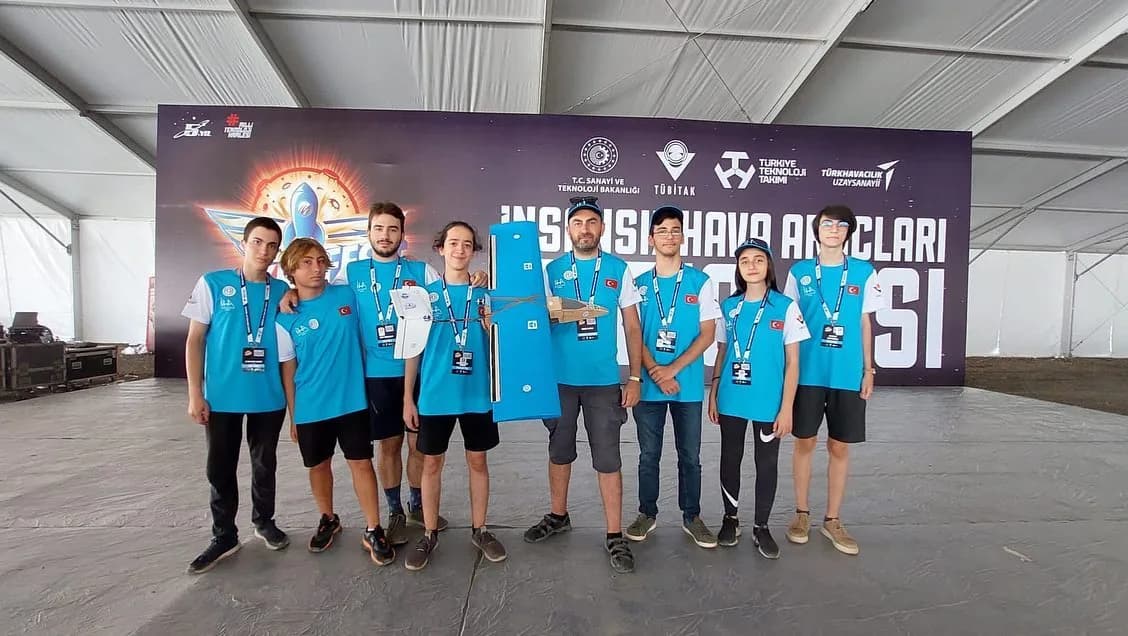
A fixed-wing UAV that reached the final stage of TEKNOFEST, for which I designed the 3D model and contributed to autopilot configuration.
- Competition
- TEKNOFEST — High School UAV
- Category
- Fixed-wing
- Result
- Final stage
- My role
- 3D design & autopilot configuration
Technologies
- Fixed-Wing UAV
- 3D Design
- Mission Planner
- Pixhawk
- Autopilot
Project overview
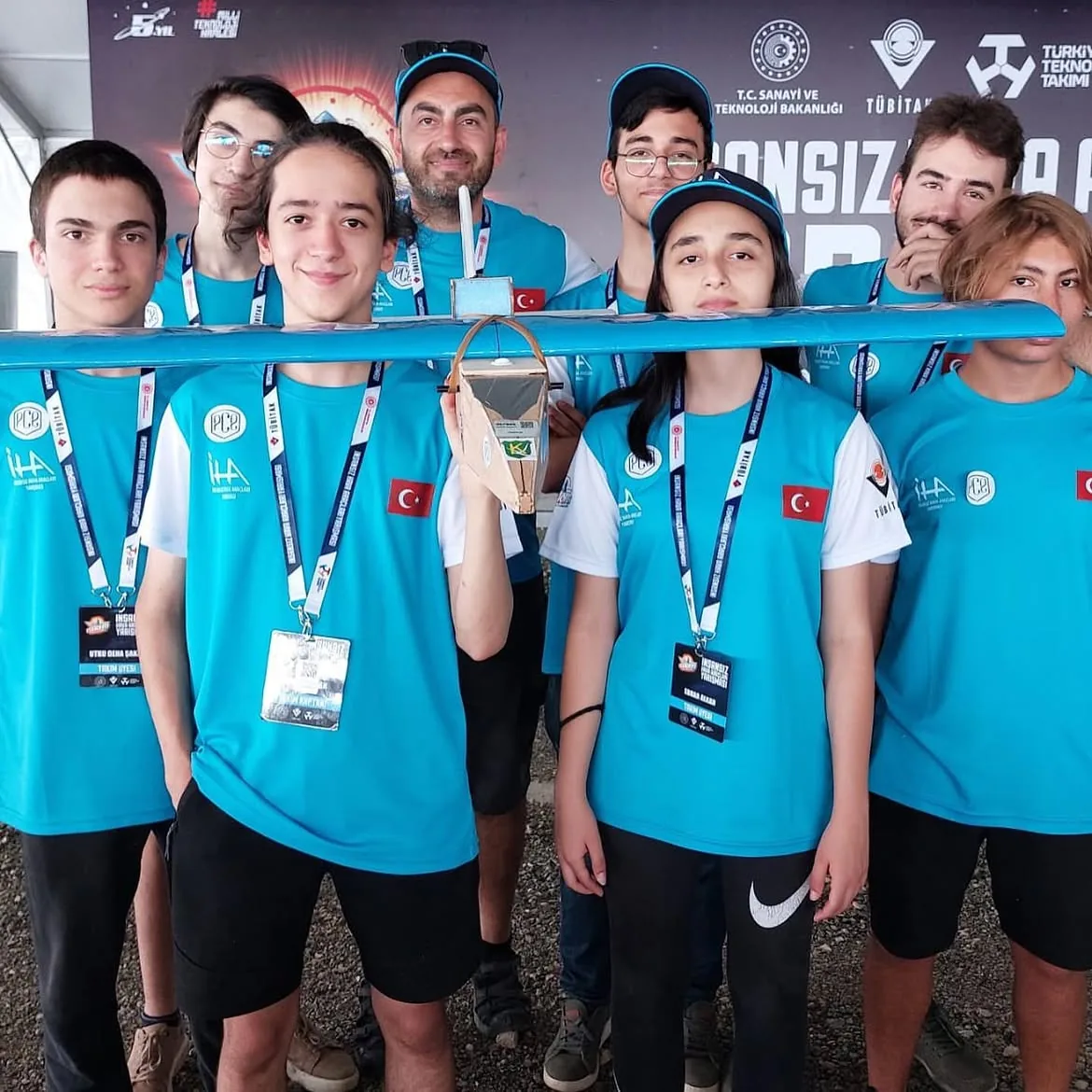
With the Kadıköy Anadolu Lisesi team, I reached the final stage of the fixed-wing category at the 2022 TEKNOFEST High School Unmanned Aerial Vehicle Competition. I designed the aircraft’s 3D model and contributed to its Mission Planner and Pixhawk autopilot configuration.
The first project outside a screen
Everything I had built until then lived inside a screen. Martı-III was a physical thing with weight, balance and parts that could break.
It taught me that a design mistake does not raise a compiler error, it hits the ground. That left me with a habit which later paid off in software too: think before you run it.
This project is a large part of why I turned to software seriously. It was the first time I produced something with a team of different specialisms rather than on my own.
The 3D design
The aircraft’s three-dimensional design was mine. Fixed-wing is a far less forgiving category than rotary: you cannot hover, so take-off, glide and landing have to be planned as one continuous movement.
Almost every design decision was a search for balance. A larger wing lifts more but drags more; a heavier fuselage survives more but takes off harder; a longer tail flies more stably but turns more sluggishly.
I learned there that a model looking good on screen and a model flying are different things. Every dimension needed a justification, and we had to defend that justification in writing in the competition report.
Autopilot and Mission Planner
Alongside the design I worked on the autopilot software. We prepared flight plans, tuned parameters and followed telemetry through Mission Planner.
Putting waypoints on a map was the easy part; the real work was tuning the parameters that decide how the aircraft behaves between those points. Push a control gain too high and the aircraft oscillates; leave it too low and the wind pushes it off course.
It was the first time I saw the gap between simulation and a real flight. A plan that looked flawless on screen could be rewritten from scratch on the field because of wind.
Reaching the finals
Reaching the finals was not something one person could do. Aerodynamics, electronics, fabrication and reporting sat with different people, and all of it had to connect.
TEKNOFEST’s documentation process — including design reports and critical design reviews — gave me early experience with technical documentation. Looking back, I see that explaining an engineering decision in writing is an essential part of building it.
Other projects
- AISiteMindA RAG-powered AI assistant that retrieves relevant information from websites and user-provided content and turns it into structured answers.View project
- GamesThe Nameless CoastA Godot puzzle game that teaches Mandarin characters through exploration, context and inference rather than memorisation.View project
- WebMir HoldingA responsive, bilingual corporate website whose initial version I built and launched as the sole developer.View project